Wednesday, April 15, 2009

Babylon, Iraq

Alexander the Great's reign came to a halt when he died in Babylon in 323 B.C.E.


It seems that Alexander the Great was a healthy 33 year old man, so how could he have died of natural causes when he was fine one day, and not the next? Many historians have come up with theories of how his demise came about, but one hypothesis is this : Once Alexander arrived in Babylon, many bad omens happened, like crows fighting, then dropping dead right in front of him. Although these all said that he was going to fall from his throne, he was not deterred. He attended many parties while in Babylon, and drank far too much which leads to the belief of a conspiracy of some of his close friends who were secretly unhappy with him, poisoned him. He became very sick, and kept getting worse with no improvement in his condition in his future. On either May 20th or 30th 323 B.C.E., Alexander the Great took his last breath after a tormenting 15 days.


Just skimming the surface of the many places he visited can be found on this map : Alexander the Great

Patala, India

Indus River Delta


When Alexander the great reached Patala, it was the summer of 325 B.C.E. and the hottest time of it. Patala is found at the center of the Indus Delta, where Alexander built a harbor with many ships so he could explore both sides going in different directions from his harbor. Once he reached the ends of the arms of the delta, he explored the ocean. This is the first time a Macedonian (or an entire army for that matter) has seen the ocean. With his new fleet of 150 ships he wanted to see everything surrounding this area, and find a water way between the Indus and Persian Gulfs. He set Nearchus, someone with naval experience, in charge of the fleet, while Alexander took his troops and walked through the Gedrosian Desert.


Just skimming the surface of the many places he visited can be found on this map : Alexander the Great
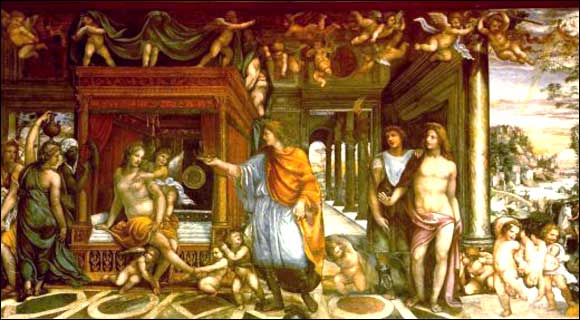
Samarkand, Iran

The marriage of Alexander the Great and Roxane


In 327 B.C.E., the daughter of a Bactrian Nobleman Oxyartes, Roxane, married Alexander the Great. She was the first at the age of 16 to marry the brilliant military mind of two, possibly three wives. Roxane's son was Alexander Aegus whom Alexander the Great never got to meet- he died before the child was born. She ordered the death of Alexander's second wife Stateira of Persia killed. Getting a taste of her own medicine, while on the way to live with Alexander's mother Olympias in 319, her caravan was captured by a successor of Alexander (Cassander) in 316 and was killed along with her son for posing a threat to the throne.


Just skimming the surface of the many places he visited can be found on this map : Alexander the Great

Bactria, Afghanistan

Hindu Kush Mountains.


The army of Alexander the Great followed him faithfully through the cold, winter climates of Hindu Kush while in pursuit of the Persian leader Bessus in March and April 329 B.C.E. With an army of 8,000 Bactrians Bessus tried to force the Macedonian army to follow him into India where Bessus's own army would be more comfortable fighting, but Alexander was approaching too quickly, so the Bactrians abandoned their leader. Those that remained loyal regardless of the approaching danger crossed the river Oxus with him. Alexander was impending, but with his troops on the verge of starvation, they could not move as quickly as Alexander would have liked. Having already crossed Hindu Kush, the men looked for grains that weren't there, but cleverly hidden by the local people. They survived on fish and herbs, and when those main sources of food ran out, Alexander told them to eat their pack animals which let them survive until the arrived at Bactria.


Just skimming the surface of the many places he visited can be found on this map : Alexander the Great

Arbela

Darius the II is on the left, the Persian King whom Alexander defeated.


Gaugamela was called by the village that the battle itself was fought at, as most battles are. This was the major battle between Alexander of Macedonia and Darius II of the Persian Empire. In the summer of 331 B.C.E. had finally started to put the plan that he had been working on for a couple years into motion, trying to just strike the heart of the empire. Over the course of these two years, Darius prepared a great army to form a defense to Alexander. The battle was intricate and well planned by both sides, but in the end, Alexander the Great prevailed and rose above the Persian army when he forced Darius to flee his kingdom. After defeating the Persian King in battle, by January of 330 B.C.E., Alexander had moved into Persepolis to loot the city and its palaces, and then proceeded to burn it to the ground to show his power.

Just skimming the surface of the many places he visited can be found on this map : Alexander the Great

Jabal Maqlub, Iraq

The Tigris River.


Alexander the Great played many parts for his father throughout his time as ruler. With a teacher like Aristotle, it was no doubt an inspiration for all of Alexander's life, and so he strived to be able to do all he could for the empire that would soon be his. He was always speaking with various people, all of high standings in the court of his father. At the age of 18, he was in charge of a cavalry accompanying his father into the battle of Chaeronea. He was always speaking with various people, all of high standings in the court of his father. Only two years later, he was honored by serving his father as an ambassador to Athens, getting a head start on becoming a ruler.

Just skimming the surface of the many places he visited can be found on this map : Alexander the Great

Yassihüyük, Turkey

Alexander the Great cutting the chariot from the Gordian Knot.

The Phrygians were without a king, so an oracle said whoever walked through the city in an ox-cart was fit to rule the city without any arguments. A poor peasant Gordias was that man, and so became king. His son Midas dedicated the cart to the Phrygian’s equivalent of the Greek Zeus, and tied to a post with an elaborate knot of cornel bark. In 333 BCE , while Alexander and his army were resting in Gordium, Alexander wanted to try and untie the knot. He could not find the ends, and so could not undo the knot, causing him to cut through it with his sword so he could find the ends, and unwind it. His biographers declared that whoever made it untied the knot was to become King of Asia, as Alexander proved to be true, and not just a quickly thought up prophecy to make the powerful Alexander happy. There is now a saying to 'cut through the Grodian Knot' which means to cut through the matter without caring about any of the other details.


Just skimming the surface of the many places he visited can be found on this map : Alexander the Great

Pella, Greece

A picture portraying the birth of Alexander the Great.
On either June 20th or June 26th 356 B.C.E., Alexander the Great was born in Pella, Macedon (now in present day Greece) to King Phillip II of Macedon and Olympias, an Epirote Princess who was the fourth of about seven or eight wives to the King. Both his parents were supposedly related to great figures, such as the father’s relation to Hercules, and Olypias’s connection to Achilles. His father was having a fantastic day full of good news the day that word arrived to him that Olympias had bore a son. Phillip had already heard that day that his horse had won the race in the Olympics and he had just won a battle against the Illyrians, and then the news of his son Alexander’s birth had been the hat trick for the day. Hearing three great things in one day meant that the child would be invincible, and had been given the task of fulfilling prophecies from the day of his birth. During his life, he was raised by the nurse Lanike, then taught by two of the greatest philosophers of all time; Leonidias and Aristotle.

Just skimming the surface of the many places he visited can be found on this map : Alexander the Great

Tuesday, April 14, 2009

Alexander the Great : Powerful Warrior and Ruler

Alexander the Great, King of Macedon and a brilliant military mind, is one of the most profound people in history, believed to have never lost a battle during his entire military career. Traveling across Europe from his birth place in Pella, Greece to Yassihüyük, Turkey, he fulfilled the prophecy of the Gordian Knot by becoming ruler of Asia; all that was known of the world at the time by conquering many great empires including the Persian Empire, some on the Mediterranean Coast, and then more in Northern Africa, pushing as far as India. On his and his army’s journey across Asia, he accomplished many things, including striking terror in all those he came across, and defeating one of the most feared empires of the world during his lifetime: The Roman Empire. He almost quenched his need of going to the ends of the earth that Aristotle told him of during his years of teachings, filling his head with an overwhelming amount of aspirations that he drove himself to complete until his death on June 11th, 323 B.C.E.

Just skimming the surface of the many places he visited can be found on this map : Alexander the Great

Tuesday, March 31, 2009

Trying it out..


This is just a test... see if I can work this blog right...